
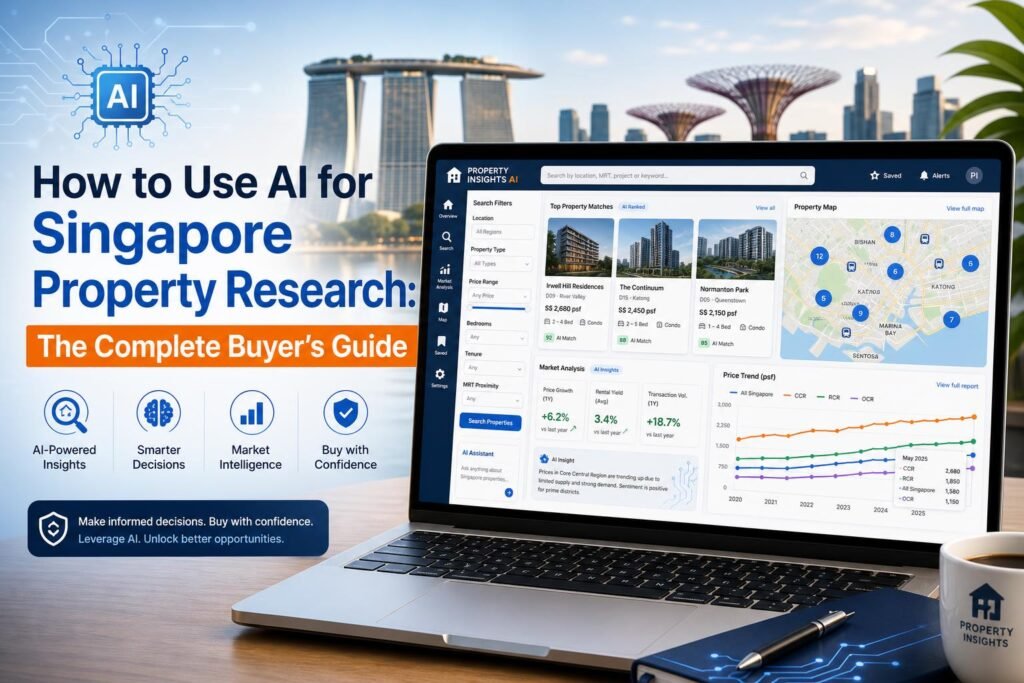
Buying property in Singapore is one of the most significant financial decisions most Singaporeans will make in their lives. The process involves navigating HDB eligibility rules, cooling measures, stamp duties, loan-to-value ratios, total debt servicing ratios, CPF usage rules, and a constantly evolving regulatory environment. Making sense of all of this traditionally required either paying a property agent, hiring a lawyer for initial advice, or spending weeks reading through government websites and property forums.
AI tools, used correctly, can dramatically accelerate and improve this research process. They cannot replace a professional property agent or lawyer for finalising a purchase, but they can get you to a level of understanding in hours that would previously have taken weeks. This guide shows you exactly how.

The Most Important Tool for Singapore Property Research: Perplexity AI
Perplexity AI is the most valuable AI tool for Singapore property research because it searches the web in real time and provides cited answers. Property regulations in Singapore change regularly – ABSD rates, LTV limits, cooling measures, and grant eligibility criteria have all been adjusted multiple times in recent years. Unlike ChatGPT which relies on training data that may be outdated, Perplexity pulls from current sources including HDB, URA, and MAS websites.
Go to perplexity.ai and ask your questions directly. Here are example queries that will get you immediately useful, current information:
For ABSD rates: What are the current Additional Buyer Stamp Duty rates for Singapore citizens, permanent residents, and foreigners as of 2026? Show the full rate table. Perplexity will pull from the current IRAS website and give you the accurate current rates with a direct link to verify.
For HDB eligibility: What are the current eligibility criteria for Singapore citizens to purchase an HDB resale flat? Include income ceilings, citizenship requirements, and property ownership rules. Perplexity will pull from the official HDB website.
For cooling measures: What property cooling measures are currently in effect in Singapore in 2026 and how do they affect buyers? This gives you a clear summary of all current restrictions.
For grants: What housing grants are available for first-time Singapore citizen couples buying an HDB resale flat? Show the current grant amounts and eligibility criteria. Perplexity will pull from the HDB website and give you current grant amounts.
Using ChatGPT for Property Calculations and Scenario Analysis
While Perplexity is better for current regulatory information, ChatGPT excels at explaining concepts, working through calculations, and helping you think through different scenarios. These are complementary uses.
Understanding the Total Debt Servicing Ratio: Ask ChatGPT to explain the TDSR and MSR framework in plain English and then work through a specific calculation: My gross monthly income is $7,500. My existing car loan repayment is $800 per month. What is the maximum monthly mortgage payment I would be eligible for under Singapore’s TDSR framework? Assume a 30-year loan term and current interest rate of 3.5%. Calculate this step by step.
Comparing property types: Ask ChatGPT to help you think through the trade-offs between different property types for your situation: I am a 34-year-old Singapore citizen married to a Singapore PR. We have a combined income of $12,000 per month and $200,000 in savings. We are deciding between a new BTO flat in Tengah, an HDB resale flat in Bishan, and a small resale condo in Jurong East. What are the key financial and lifestyle trade-offs we should consider for each option?
Understanding stamp duty calculations: Ask ChatGPT to walk you through the stamp duty calculation for a specific property price: Explain how Buyer Stamp Duty is calculated for a Singapore citizen purchasing a $750,000 HDB resale flat. Show the calculation tier by tier. This helps you understand the actual cost you will incur rather than just knowing a rate percentage.
Using AI to Research Neighbourhoods
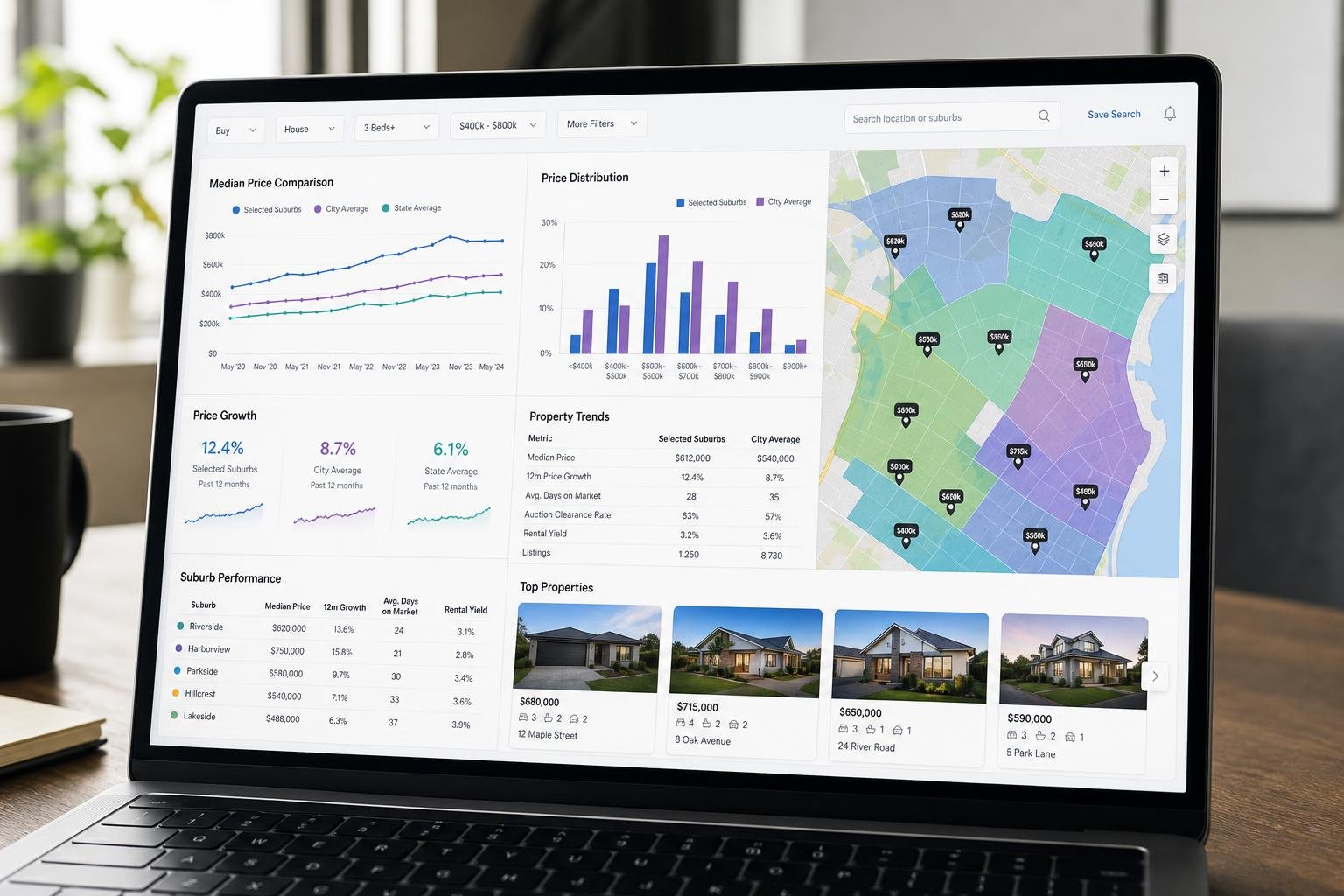
Beyond the financial and regulatory aspects, property buyers need to understand neighbourhoods. AI can help here too, though with important caveats.
Use Perplexity for current information: What MRT lines and stations serve the Tengah area and what are the projected completion dates for upcoming stations? What primary schools are within 1km of the Tampines North area? (relevant for Primary 1 school registration). What commercial and retail developments are planned for the Jurong Lake District in the next 5 years?
Use ChatGPT for help formulating the right questions to ask your property agent or to think through neighbourhood criteria: I have two young children aged 3 and 6. We prioritise good primary school access, neighbourhood safety, green spaces, and good hawker options. Help me create a checklist of specific things to look for and ask about when evaluating neighbourhoods in Singapore.
Creating a Property Comparison Framework
When you are evaluating multiple properties, a structured comparison helps you make a rational decision rather than an emotional one. Ask ChatGPT to help you create one: I am comparing 4 HDB resale flats in different areas of Singapore. Help me create a comprehensive comparison template in table format with rows for: asking price, price per square foot, floor level, remaining lease, proximity to MRT in minutes, nearest primary school and distance, nearest hawker centre, estimated monthly mortgage at current rates, and any renovation required. Include a scoring column for each factor where I can rate each property 1-5.
Copy the table into a Google Sheet and fill it in for each property you are considering. This structured approach often makes the best choice clearer than relying on impressions and emotions from viewings.
Important Caveats and Limitations
Several essential warnings about using AI for property research in Singapore. Always verify regulatory information from official sources. Singapore property regulations change frequently and even Perplexity, which searches in real time, may occasionally return outdated or slightly inaccurate information. Before making any decision based on regulatory information – eligibility, grant amounts, stamp duty rates – verify directly on HDB.gov.sg, URA.gov.sg, or IRAS.gov.sg.
AI cannot replace a licensed property agent for a major transaction. A good property agent brings current market knowledge, negotiation experience, access to recent transaction data, and professional responsibility that AI tools cannot replicate. Use AI to prepare yourself to work with an agent more effectively – to understand the process, ask better questions, and evaluate the agent’s advice more critically.
AI cannot verify the physical condition of a property. For HDB resale flats, always do a thorough physical inspection and consider hiring a professional building inspector. No AI tool can tell you whether the plumbing is deteriorating or whether the renovations are structurally sound.
Summary: The AI Property Research Workflow
Start with Perplexity for current regulatory information on eligibility, grants, and cooling measures. Use ChatGPT for calculations, scenario analysis, and building your evaluation framework. Use Perplexity for neighbourhood research on schools, transport, and planned developments. Build a comparison template with ChatGPT’s help and fill it in for each property you are seriously considering. Then work with a licensed property agent and solicitor for the actual transaction, bringing your AI-assisted research to those conversations so you can ask better questions and make more informed decisions.
Related reading on Agent Setup SG
- AI Tools for Singapore Students: Study Smarter and Get Ahead in 2026
- How to Use AI for Your Singapore Hawker Business (Practical Guide)
- How to Use Perplexity AI Instead of Google: The Complete Singapore Guide
FAQ: How to Use AI for Singapore Property Research: The Complete Buyer's Guide
Is this suitable for beginners in Singapore?
Yes. This guide is written for practical beginners and focuses on clear steps.
Do I need paid tools to start?
No. You can start with free options and upgrade only when results justify it.
How quickly can I implement this?
Most people can complete a first setup in under one hour, then improve it over time.
What should I track first?
Track one key outcome such as leads, response rate, time saved, or conversion.
What common mistake should I avoid?
Do not skip the basics. Clear setup and consistent usage matter more than fancy features.
Free resource for Singapore readers: Want to save time and money with AI starting today? Download the free Singapore AI Cheat Sheet, 10 prompts made for Singaporeans, plus a free 7-day email course delivered straight to your inbox. Grab it now at agentsetupsg.com/free instead.