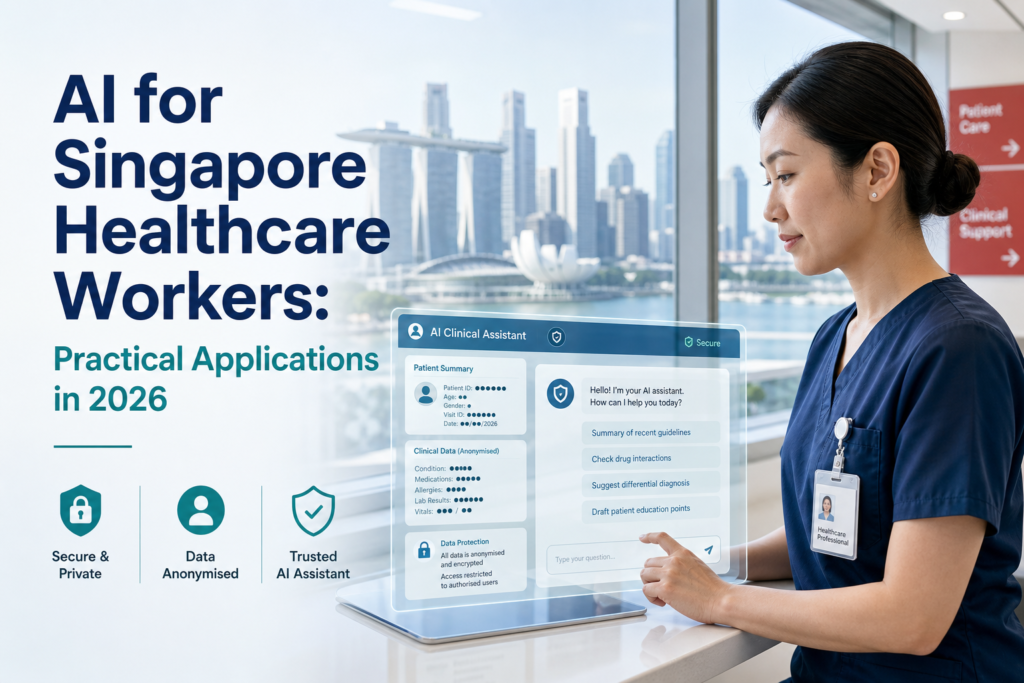
Singapore’s healthcare system faces a familiar paradox: the demand for care is growing while the workforce that provides it is constrained. The population is ageing, chronic disease prevalence is increasing, and healthcare workers at every level are under significant workload pressure. AI tools are being deployed in Singapore’s healthcare system to address this challenge – not by replacing clinical judgment and human care, but by reducing the administrative burden that takes healthcare workers away from the patient contact that is their core purpose.
This guide covers practical, safe, and appropriately bounded applications of AI for Singapore healthcare workers across different roles and settings. All clinical decisions remain the responsibility of qualified healthcare professionals. AI is a tool, not a clinician.
Documentation and Clinical Notes
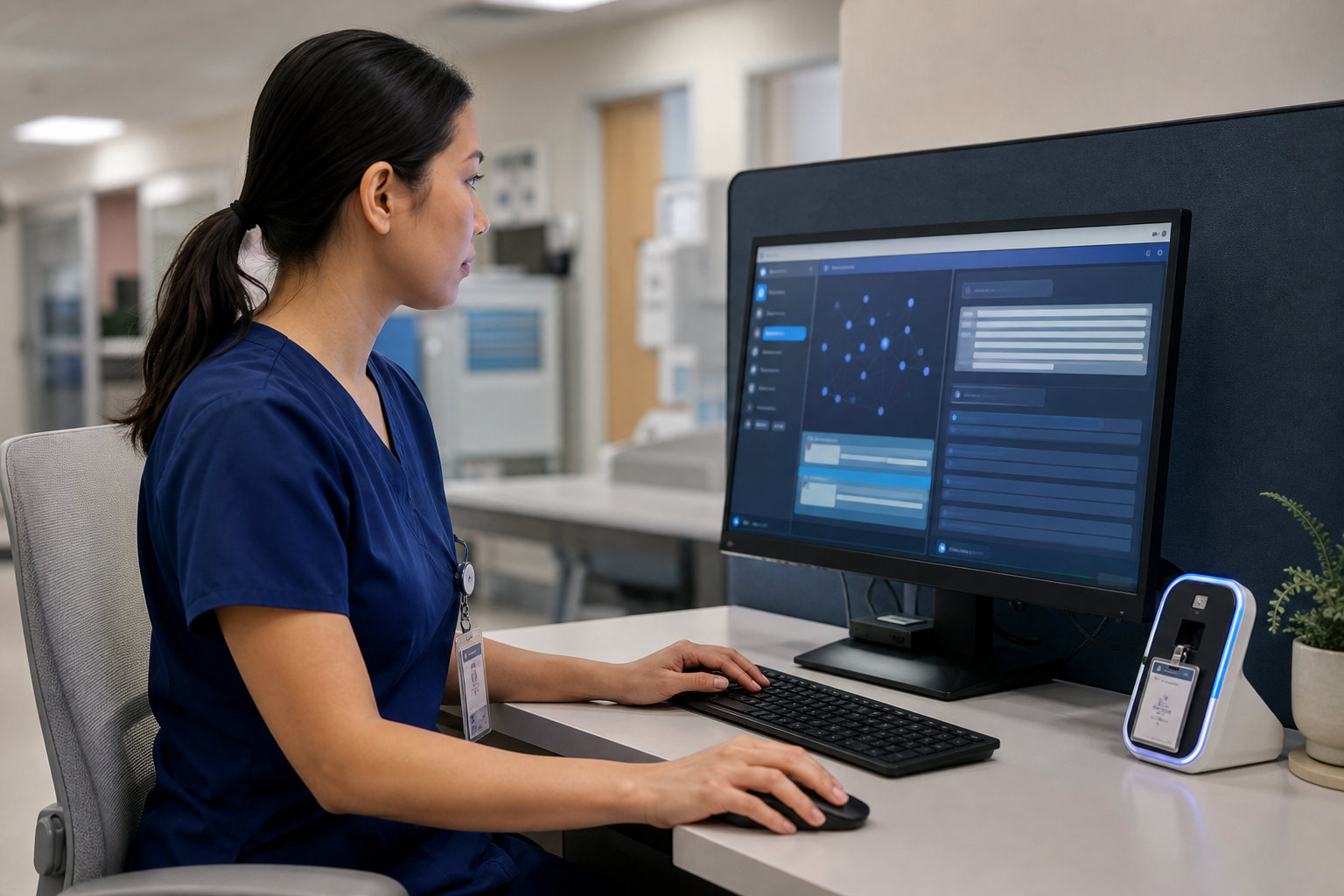
Documentation is one of the heaviest administrative burdens for Singapore healthcare workers. Doctors, nurses, and allied health professionals spend significant portions of their working day on clinical notes, referral letters, discharge summaries, and care plan documentation – time that is not available for direct patient care.
AI transcription tools like Otter.ai or dedicated clinical AI documentation tools (DAX from Nuance, Abridge, and similar) can listen to patient consultations and generate draft clinical notes automatically. The clinician reviews and approves the draft rather than writing from scratch. Singapore hospitals including NUHS institutions are actively evaluating and piloting these technologies.
For individual healthcare workers not yet covered by institutional AI documentation tools, using ChatGPT to help structure clinical documents from bullet point notes is a practical workaround. Important note: never enter patient-identifiable information into public AI tools. Use anonymised or de-identified information and add the patient specifics only after the document structure is generated.
Patient Communication Materials

Creating clear, accessible patient education materials in multiple languages is a persistent challenge in Singapore’s multilingual healthcare environment. AI tools can significantly accelerate this work.
Discharge instruction materials: Write a patient-friendly discharge instruction sheet for a patient following [procedure name]. The instructions should explain: what to expect in the next 72 hours, medications to take including timing, activity restrictions, warning signs that require immediate medical attention, and when to follow up. Language should be at a Primary 5 reading level. Simple sentences, no medical jargon. Available space on the sheet is [describe].
Multilingual materials: Once the English version is complete, use ChatGPT to translate into Mandarin, Malay, or Tamil: Translate this patient instruction sheet into simplified Mandarin (Simplified Chinese characters with Pinyin). Maintain the same clear, accessible language level as the original.
Research and Continuing Education
Staying current with clinical literature is an ongoing professional responsibility for all Singapore healthcare workers but is increasingly challenging given the volume of research being published. AI tools can help manage this information load.
Claude is particularly valuable for reading and synthesising research papers. Paste a research paper into Claude (removing any patient identifiers if relevant) and ask: Summarise the key findings of this research paper. What was the study design? What were the main outcomes? What are the clinical implications for a Singapore general practitioner treating patients with [condition]? What are the limitations of this study?
Use Perplexity for current clinical guideline updates: What are the current CPG (Clinical Practice Guideline) recommendations in Singapore for managing [condition]? What recent changes have been made to the Singapore guidelines on [clinical topic]? These searches link to MOH and professional society publications for verification.
Administrative Efficiency for Healthcare Teams
Beyond clinical documentation, Singapore healthcare workers deal with significant administrative workloads: meeting agendas and minutes, team rosters, policy document reviews, training materials, and departmental communications. AI handles all of these efficiently.
Meeting minutes: AI can take rough meeting notes and produce structured minutes with decisions, action items, and responsible parties clearly documented. Staff communications: AI helps write clear, professional team communications including roster change notifications, policy update announcements, and department briefings. Training materials: AI can help structure onboarding materials for new healthcare staff, clinical orientation documents, and continuing education module outlines.
Ethical and Safety Considerations for Singapore Healthcare AI
Patient data protection is the most important consideration. Singapore’s PDPA and healthcare-specific data governance requirements restrict how patient information can be used and shared. Never enter patient-identifiable data into public AI tools. Work within your institution’s data governance framework and use only approved systems for patient data processing.
Clinical responsibility remains entirely with the qualified healthcare professional. AI can assist with documentation, research, and administration. It cannot diagnose, prescribe, or replace clinical judgment. This boundary must be maintained clearly.
Singapore’s healthcare institutions have their own AI policies that may differ from general public AI guidance. Check your institution’s specific policies on AI tool use before incorporating any new AI tools into your work.
Want to save time and money with AI starting today? Download the free Singapore AI Cheat Sheet, 10 prompts made for Singaporeans, plus a free 7-day email course delivered straight to your inbox. Grab it now at agentsetupsg.com/free instead.
Related resources
- Related guide: How Singapore Lawyers Are Using AI in 2026: A Practical Guide
- Practical walkthrough: How to Use AI Responsibly: A Practical Guide for Singaporeans
- Detailed breakdown: How to Use AI for Your Singapore Hawker Business (Practical Guide)
- Product resource: 100 Prompts for SG Content Creators
- Product resource: 100 Prompts for SG Working Adults