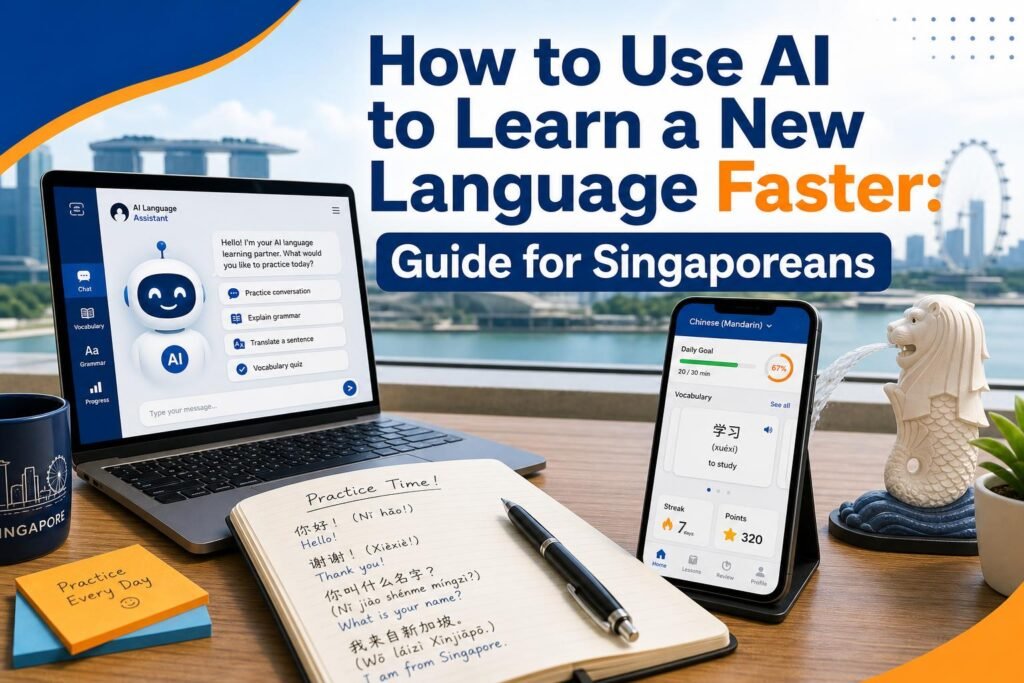
Singapore’s multilingual heritage is one of our defining national characteristics. With four official languages – English, Mandarin, Malay, and Tamil – and a population that spans dozens of cultural backgrounds, language skills carry real social, professional, and commercial value in Singapore in ways that are distinct from almost anywhere else in the world.
For Singaporeans wanting to improve an existing language or learn a new one, AI tools have created a learning environment that was simply not available a few years ago: patient, always-available practice partners who can converse, correct, explain, and adapt to your exact level and learning goals. This guide covers how to use AI tools most effectively for language learning in the Singapore context.
Using ChatGPT as a Language Tutor
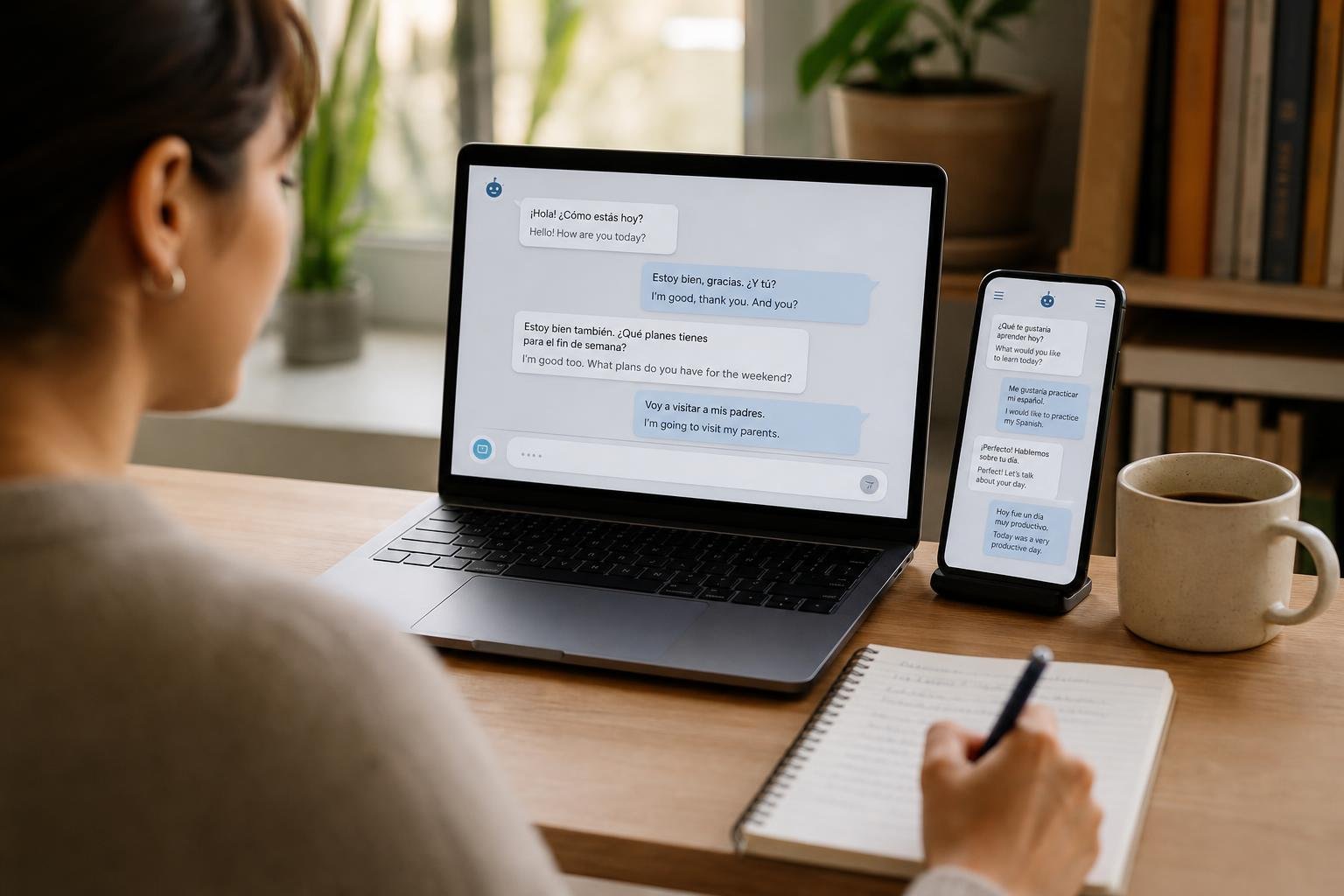
ChatGPT is genuinely excellent as a language tutor. It can hold conversations in over 90 languages, explain grammar in your native language, generate vocabulary exercises, roleplay different conversation scenarios, and provide instant feedback on your writing. The key is knowing how to prompt it effectively for language learning.
For conversation practice: Tell ChatGPT the specific scenario you want to practise. Do not just say let us practise Mandarin – say: I am learning Mandarin for business meetings with Chinese suppliers. Let us roleplay a situation where I am introducing myself and my company at a first meeting. Speak to me in Mandarin, keep the vocabulary at an intermediate level, and after each exchange correct any mistakes I make before continuing. This specificity makes the practice session far more useful than generic conversation.
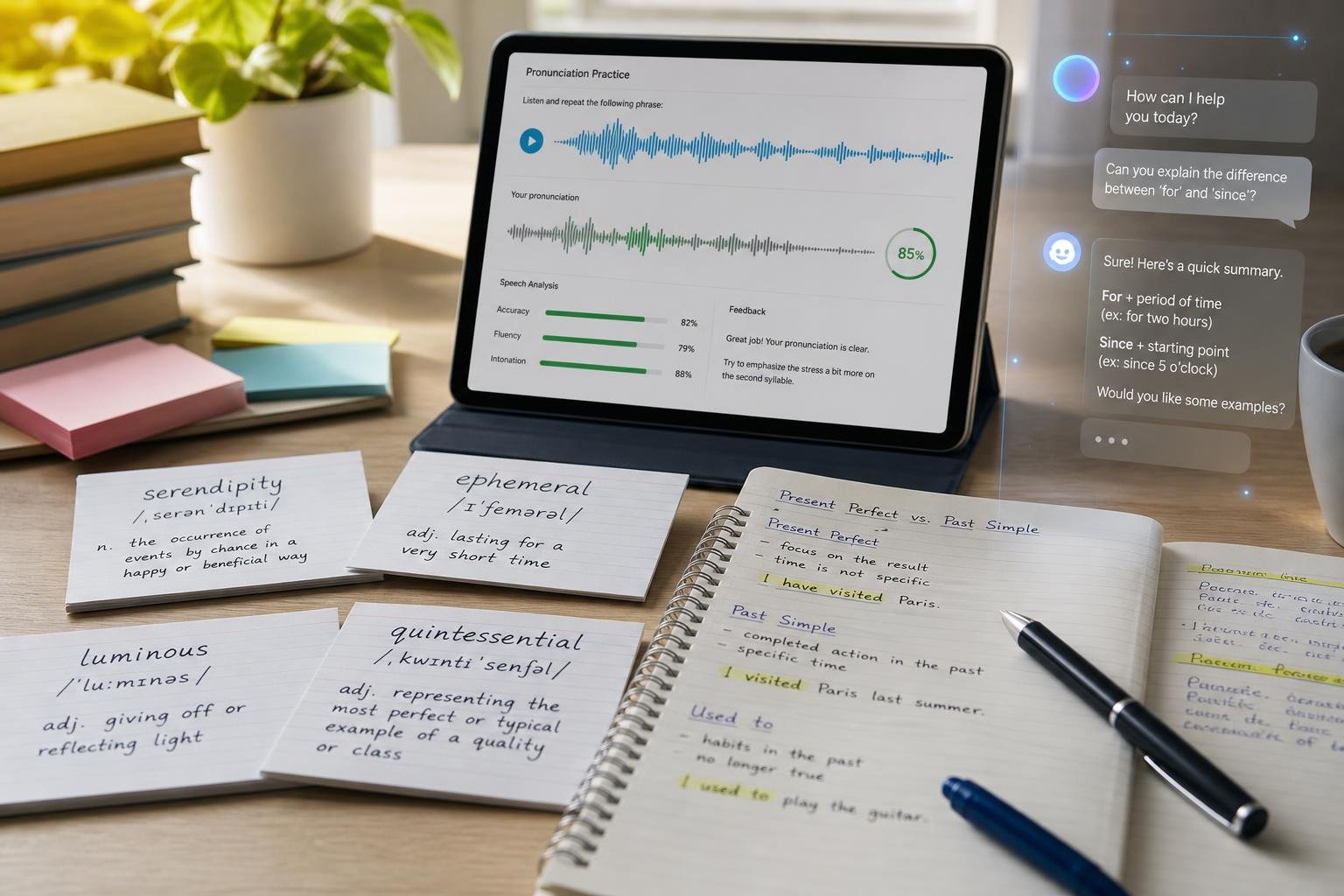
For grammar explanation: ChatGPT explains grammar remarkably well. Ask it to explain the difference between two constructions you are confusing, to give you examples of a grammar rule in use, or to explain why a sentence you wrote is wrong and how to correct it. The ability to ask follow-up questions – something you cannot do with a textbook – makes AI grammar explanation significantly more efficient than traditional self-study.
For vocabulary acquisition: Ask ChatGPT to generate vocabulary lists around specific topics relevant to your goals. If you are learning Mandarin for business: give me the 30 most important Mandarin words and phrases for negotiating with suppliers. Show each in characters, Pinyin, and English, and give one example sentence for each. If you are learning Malay for everyday Singapore life: give me the 20 most useful Malay phrases for interactions in Singapore – hawker centres, shops, and with Malay neighbours and colleagues.
The Best AI Language Learning Apps for Singaporeans
Beyond ChatGPT, several dedicated AI-powered language learning applications have become excellent choices for structured learning with gamification, speech recognition, and curriculum design.
Duolingo: The most widely used language learning app globally, Duolingo uses AI to personalise your learning path based on your performance, identify your weak areas, and adjust the difficulty and content of lessons accordingly. The gamification elements – streaks, experience points, leagues – make daily practice feel more like a habit than a chore. Available for all of Singapore’s major languages including Mandarin, Malay, Japanese, Korean, and others. Free to use, with a paid plan ($7-10 USD/month) that removes ads and adds additional features.
Pimsleur: An audio-focused language learning system based on spaced repetition. Pimsleur is particularly good for developing speaking and listening comprehension because it teaches language through hearing and repetition rather than reading. For Singapore MRT commuters, Pimsleur is ideal – you can have a language lesson during your commute without looking at a screen. The subscription is more expensive than Duolingo at approximately $20 USD per month but the audio-first approach is highly effective for oral language skills.
Elsa Speak: An AI pronunciation coach focused on English speaking. Elsa uses speech recognition technology to evaluate your pronunciation phoneme by phoneme and gives you specific feedback on exactly which sounds you are producing incorrectly and how to adjust. For Singapore professionals working in international businesses where clear English pronunciation matters for video calls with overseas colleagues and clients, Elsa is uniquely valuable. It specifically trains Singapore English speakers to adjust pronunciation for international clarity when needed.
Practical Singapore Language Learning Scenarios
Learning Mandarin for Singapore business: This is the most common language learning goal among English-dominant Singapore professionals. The business Mandarin context in Singapore is distinct – it tends to be standard Putonghua (Mandarin) rather than dialect variations, and Singapore Chinese business culture has its own norms around formality, gift-giving, and relationship-building that language skills need to be connected to.
Recommended approach: Use Duolingo for daily vocabulary and reading practice. Use ChatGPT for conversation roleplay in specific Singapore business scenarios – meeting clients, discussing proposals, small talk over lunch. Use Pimsleur for developing natural pronunciation and listening comprehension. Aim for 30 minutes per day across these tools.
Learning Malay for community connection: For Singapore Chinese and Indian Singaporeans who want to communicate more naturally with Malay colleagues and neighbours, even basic Malay competency has significant social value. Malay is Singapore’s national language and appears in the national anthem, military commands, and daily life in ways that make even rudimentary knowledge feel meaningful.
Ask ChatGPT: Teach me the 30 most useful Malay phrases for everyday interactions in Singapore. Include greetings, basic conversation, and phrases relevant to hawker centres and the workplace. Show Romanised spelling, pronunciation guide, and English meaning.
Learning Japanese or Korean for career or interest: Singapore’s close economic ties with Japan and Korea, combined with the popularity of Japanese and Korean culture through food, entertainment, and tourism, makes these languages particularly popular choices among Singapore learners. Both Duolingo (for Japanese, Korean) and dedicated apps like WaniKani (for Japanese kanji) work well alongside ChatGPT conversation practice.
Building a Sustainable Language Learning Habit
The biggest challenge in language learning is not the difficulty of the language – it is maintaining the daily practice habit over the months required to reach meaningful proficiency. AI tools make this easier because they reduce the friction of access to practice and provide immediate feedback that makes progress feel tangible.
Design your learning habit around your existing schedule. MRT commute: Pimsleur audio lessons. Lunch break: 15 minutes of Duolingo. Evening: 15 to 20 minutes of ChatGPT conversation practice. This adds up to approximately 45 to 60 minutes per day – enough for meaningful progress in any language – without requiring any major schedule restructuring.
Set a specific 90-day goal rather than an open-ended aspiration. Not I want to learn Mandarin but by the end of 90 days I want to be able to introduce myself and my company in Mandarin, discuss pricing at a basic level, and understand simple responses. Specific goals make practice sessions purposeful and progress measurable.
Use ChatGPT to create a structured 90-day curriculum: I want to reach basic business conversational level in Mandarin in 90 days. I can dedicate 45 minutes per day. I am starting from a beginner level – I know simple greetings but nothing else. Create a 90-day week-by-week learning plan that includes vocabulary goals, grammar topics to cover, specific conversation scenarios to practise, and milestones to measure progress.
Related reading on Agent Setup SG
- AI Tools for Singapore Students: Study Smarter and Get Ahead in 2026
- How to Use AI for Your Singapore Hawker Business (Practical Guide)
- How to Use Perplexity AI Instead of Google: The Complete Singapore Guide
FAQ: How to Use AI to Learn a New Language Faster: Guide for Singaporeans
Is this suitable for beginners in Singapore?
Yes. This guide is written for practical beginners and focuses on clear steps.
Do I need paid tools to start?
No. You can start with free options and upgrade only when results justify it.
How quickly can I implement this?
Most people can complete a first setup in under one hour, then improve it over time.
What should I track first?
Track one key outcome such as leads, response rate, time saved, or conversion.
What common mistake should I avoid?
Do not skip the basics. Clear setup and consistent usage matter more than fancy features.
Free resource for Singapore readers: Want to save time and money with AI starting today? Download the free Singapore AI Cheat Sheet, 10 prompts made for Singaporeans, plus a free 7-day email course delivered straight to your inbox. Grab it now at agentsetupsg.com/free instead.
Related resources
- Related guide: AI Image Generators Compared: Which is Best for Singaporeans in 2026?
- Practical walkthrough: How to Use AI Responsibly: A Practical Guide for Singaporeans
- Detailed breakdown: How Singaporeans Are Using AI to Invest Smarter in 2026
- Product resource: 100 Prompts for SG Content Creators
- Product resource: 100 Prompts for SG Working Adults